What is the LHC?
Updated: Jun 15

How does the LHC work?
The Large Hadron Collider is a ring-based collider, which accelerates protons in two beam pipes in opposite directions, one clock-wise and the other anti-clockwise.
At a number of points in the two rings, the beams are steered into each other and a large number of the protons collide, releasing huge amounts of energy in the form of myriad different particles, including the famous Higgs boson.
The LHC was designed and built through international cooperation at CERN in Switzerland, for peaceful (non military) research in high-energy physics.
The story of CERN's LHC is fascinating and involves the evolution of circular accelerators.
The Synchro-Cyclotron
The first accelerator at CERN was a cyclotron that accelerated protons from scratch in circular orbits inside two D-shaped, hollow containers, separated by a gap. The configuration and details of the circular accelerator with a circumference of 15.7 metres, is shown in Diagram 1.

Diagram 1 - The Sychro-Cyclotron
A high-frequency voltage was connected across the gap to give protons a kick each time that they crossed the gap.
A strong, vertical magnetic field forces the particles into an ever-increasing spiral as they travel faster and faster around the hollow Ds.
Protons approached light speed quite quickly and when the accelerating voltage was varied with speed of particles, the machine accelerated protons to 600 MeV and became a synchro-cyclotron, meaning that the frequency of the RF voltage was synchronised with the speed of the protons.
CERN's synchro-cyclotron was used to discover the pion in 1958.
It was surpassed by CERN's second accelerator, but continued to perform useful nuclear physics research for 33 years, before being retired.
The Proton Synchrotron (PS) Still in Use
This was CERN's second accelerator, built in the 1960s in the form of a ring underground and it is used today for primary acceleration before injection into the LHC.
The tunnel has a circumference of 628 metres, built long before the LHC. Its primary purpose was to accelerate protons up to an energy of 26 GeV.
Synchrotrons accelerate particles in evacuated pipes that form a ring, the pipe diameter being measured in centimetres, whereas the ring circumference is measured in metres, the PS ring being 628 metres.
Ring-based accelerators can't accelerate particles from a stand-still like the cyclotron so, the PS ring is fed from a linear accelerator, which can accelerate protons from scratch.
Diagram 2 provides a simplistic depiction of the 26 GeV PS.

Diagram 2 – The Proton Synchrotron
How a Ring Based Synchrotron works
A LINAC produces batches of ionised particles that are introduced into the ring and travel many times around the periphery, gaining more momentum on each circuit.
There are a number of basic components involved in all CERN's ring-based synchrotrons, including the LHC, and these are;
1. Strong electromagnets and permanent dipole-magnets are used at frequent intervals around the ring to ensure that the beam maintains a circular path and does not crash into the walls of the circular beam-pipe.
2. There are currently over 250 magnets employed on the PS ring, including 100 dipole magnets.
3. An electromagnet's field strength can be varied to accommodate relativistic increases in particle speed.
4. Specialised electro magnets called quadrupole magnets, are employed to focus the beams in the horizontal and vertical planes, maintaining a tight beam.
5. Radio frequency cavities, situated at frequent intervals around the ring, in between the magnet complexes, then provide acceleration as particles pass through them, similar to the manner in which the cyclotron 'kicks' electrons as they cross the gap. In the case of the RF cavities, the particles are accelerated only as they pass through each cavity.
6. A control system varies the strengths of magnetic fields and the frequency of the RF generators as bunches of particles reach relativistic speeds, to maintain further acceleration.
7. The control system can also be used to set up a steady state condition to allow beams to continue circulating, sometimes for many hours, without being accelerated allowing for ring-based storage systems.
8. When the beam energy in a ring reaches the maximum value afforded by the physical set-up, control magnets are used to divert the beam out of the ring and into beam pipes that take the particles into the experimental hall.
9. Here, detectors are waiting to catch the debris from collisions of the beam particles with static targets.
PS's achievements
Using the giant Gargamelle bubble chamber, the PS was used to detect what are termed 'neutral current interactions' where neutrino collisions with target electrons, or hadrons, impart momentum mediated by the theoretical Z boson.
The CERN PS ring has been through a number of upgrades and enhancements over its sixty year long history and now provides the first stage of acceleration in the LHC ring complex.
The CERN Super Proton Synchrotron (SPS)
Then came the first of CERN's giant accelerators, housed 40 metres below ground in a seven-kilometre tunnel, still long before the LHC.
It became operational in 1976 producing a beam energy of up to 450 GeV and soon became the super-star ring of CERN, producing particle beams directed at fixed targets, similar to the way in which the PS was described.
In fact, the SPS can be considered as a giant version of PS, which was used for primary acceleration before injecting protons into the SPS.
To maximise beam density, a small booster ring was added to PS to increase the density of its 26 GeV beam prior to injection into SPS.
Today, SPS is CERN's second largest ring-based synchrotron. In principle, the physics behind the SPS ring is the same as that of the PS for producing accelerated proton or ion beams, using many more electro-magnets and quadrupole magnets and RF cavities in a 7-kilometre circumference.
Diagram 3 shows a simplified layout of the PS–SPS configuration.
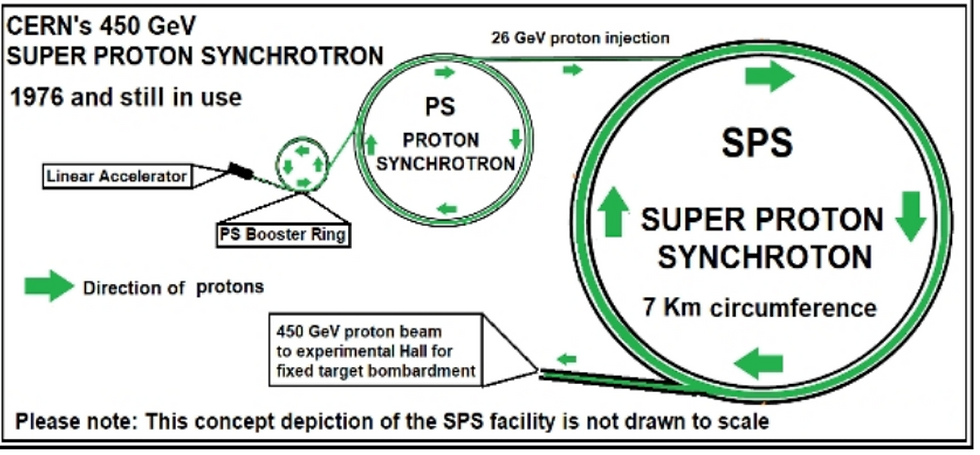
Diagram 3 – The Super Proton Synchrotron
How SPS Works
The configuration of SPS is depicted in diagram 3 as a simplistic, conceptual representation. It works as follows;
1. A linear accelerator accelerates protons which are injected into the PS booster ring.
2. The booster increases the beam density and injects into the PS where the protons are accelerated to 26 GeV and then injected into the SPS.
3. The SPS accelerates the protons in bunches to 450 GeV and delivers the high-energy beam into one of the many experimental beam lines for smashing the protons into fixed targets.
4. SPS has just over 1,300 conventional magnets, to control the beam current and ensure it continues to circulate the ring.
In common with the PS, the SPS facility could also be fed with a variety of ions instead of protons and has accelerated protons, helium-4 nuclei, nuclei of oxygen, sulphur, argon, xenon and lead, just as the PS ring has.
SPS Achievements
The famous Gargamelle bubble chamber was also used with the SPS and continued to make discoveries concerning the Z0 boson until cracks appeared in the large chamber, which could not be repaired.
Just before the cracks appeared, the SPS was responsible for detecting lepton-only transformations. This is where a muon-neutrino interacts with an electron to produce a muon and electron-neutrino. This interaction actually changes the two particles involved in the encounter in a lepton-only transformation, which only the weak force can do.
Gargamelle did not detect any Z0 bosons, but verified the theoretical mediation of Z0 bosons in weak nuclear interactions involving scattering events that exchanged momentum and also in pure leptonic transformations.
The Proton anti-Proton Collider (SppS).
CERN converted the PS and SPS combination into a proton-antiproton collider, with the two particles travelling in opposite directions in the same ring, separated by electrostatic deflectors!
A specialised facility used a PS proton input stream to produce anti-protons which were kept in a storage ring, until their numbers increased and could then be injected into the modified PS, which in turn could accelerate both protons and anti-protons before injecting them into the SPS. This is shown in diagram 4.

Diagram 4 – The Proton – Antiproton Collider
Substantial modifications and additions were required to upgrade both the PS and the SPS from proton synchrotrons to dual-beam, storage systems using protons circulating one way and anti-protons circulating in the opposite direction in the same ring!
New facilities for beam extraction and injection were also required to handle anti-protons, which also had to be produced in an attached facility.
The PS ring acted as the primary source for both particle beams before injection into the SPS, which then became the proton-antiproton collider.
The protons and anti-protons were delivered in bunches and timed such that bunches of protons crashed into bunches of anti-protons inside the ring, the first time that this had been attempted in hadron colliders, according to CERN.
Large scale detectors were designed for the SppS collider, which could be slid into position above and below a collision point before a run and then removed after the run to allow the PS–SPS configuration to be re-set as single-beam proton-accelerators to smash into fix targets. No part of the collider detectors needed to be inside the evacuated rings.
The scene was being set for collider systems at CERN.
The Large Electron Positron Collider (LEP).
In the 1980s it was decided that a tunnel with a circumference of 26.7 Km would be needed to house the single accelerating ring for the Large Electron-Positron collider (LEP), with a connecting tunnel to the SP-SPS ring primary acceleration complex.
When LEP's experiments ended, the tunnel was re-purposed to house the LHC.
The LEP was to be the biggest lepton collider in the world, a record that it still holds today for electron-positron colliders.
The tunnel was completed in early 1988 and installation of the accelerator ring was completed in 1989 and the first collisions occurred in summer of that year.
Four monster detectors were developed for LEP named, L3, Aleph, Opal and Delphi.
LEP operated from 1989 to 2000 and was something of a departure from CERN's proton accelerators - the PS and SPS rings - and had more in common with the SppS, proton - antiproton collider. See diagram 5 for details of LEP's set up.

Diagram 5 – Large Electron Positron Collider (LEP)
Because electrons and positrons can be considered as point-like particles with no internal structure (unlike protons which are made up of quarks) the collisions of point-like particles are much easier to interpret, ideal for studying weak nuclear interactions.
Design and operation of SppS provided valuable experience in building and running an accelerator ring with particles and their antiparticles circulating in the same ring and this benefited the establishment and success of LEP.
LEP contained steering electromagnets and dipole magnets to ensure that the particles continued to circulate without crashing into the walls of the pipe, just like SppS.
Focusing magnets kept the beams from diverging. Superconducting magnets were also employed to boost the total magnetic field intensity inflicted on the particle beams and electrostatic deflectors kept the two beams apart as they travelled in opposite directions in the single ring.
The RF cavities were situated along straight sections, each of which was 210 metres in length.
In the first phase of the LEP's operation, there were over 5,000 magnets involved, ensuring that the particles remained in the evacuated pipe in tight beams.
Straight sections in the ring initially housed 32 RF cavities to accelerate the particles so that the collision energy available reached 91 GeV in the fifth year of operation. This beam energy was sufficient to produce the rest mass of Z bosons (90 GeV).
In the second phase of operation, the number of accelerating cavities was increased to include 288 super-conducting cavities, increasing the beam energy available in order to produce pairs of W+ and W- bosons.
LEP Achievements
According to CERN, in the first five years of LEP's operation, something like 18 million Z bosons, each with a rest-mass of about 90 GeV, were produced.
In the second phase of operation, from 1995 to 2000, about 80,000 W boson pairs were created in total.
In 2000, its final year of operation, LEP's beam energy was increased to 104.5 GeV providing a collision energy of 209 GeV to produce energetic W boson pairs.
LEP may well have detected the Higgs boson before the LHC, but could not provide confirmation across the different detectors of the events. This was true of many of the world's high energy accelerators that probably produced Higgs bosons but without the required confirmation.
LEP actually detected Z and W bosons and provided rest-mass values for them. It also provided accurate rest-mass values for a host of other particles and confirmed that there were only three generations of fundamental particles.
LEP helped to establish the validity of the standard model of particle physics.
To prove the existence of the Higgs boson, an excitation in the Higgs field needed to be produced. This would validate both the existence of the Higgs field and the Higgs mechanism providing mass to fundamental particles. This theory had been established in the 1960s - what was needed to produce a Higgs boson and verify the theory at long last, was a Large Hadron Collider.
The Large Hadron Collider (LHC)
When LEP closed down, having accomplished its main mission to explore the weak nuclear interaction in detail, the tunnel was cleared out and two monster beam pipes, very close together, were installed.
In actual fact, the LHC was not CERN's first dual-ring, proton collider. CERN had developed one, which became operational in1971 to show the high-energy world that hadron colliders were the way-to-go, which it did successfully as a proof of concept.
(You can read about this and all CERN's accelerators in greater detail in chapter 18 of A Journey into Modern Physics.)
There are over 10,000 magnets on the two LHC rings, one circulates protons clock-wise and the other anti-clockwise.
The particles travel in an ultra-high vacuum for the entire journey in bunches before being allowed to collide, reaching a staggering 13,000 GeV or 13 TeV where 'T' stands for Terra i.e., thousand GeV.
A simplified depiction of the accelerator ring complex is shown in diagram 6, where the two LHC beams are shown as intersecting streams at four points.
Currently, the LHC is at the fore-front of high-energy, particle research, hunting for things such as quantum black holes, supermassive particles beyond the Higgs, dark energy WIMPS (weakly interacting massive particles), evidence of extra dimensions and a host of other things.

Diagram 6 – The LHC Ring Complex
How the LHC works
Production of protons starts with a linear accelerator;
1. The LINAC strips hydrogen atoms of their electrons and accelerates the resultant protons into the PS booster ring.
2. The PS booster stores and creates a dense beam which, when the required density is reached, is then injected into the PS, which accelerates the protons to 26 GeV, before injecting into the SPS.
3. The chain of rings up to and including SPS provides primary acceleration and then injects a split beam of protons, each at 450 GeV into the LHC's two beam pipes.
4. The LHC then ups the game to 6.5 TeV and provides millions of collisions each second.
5. The two beams circulate the rings over 11,000 times a second. Protons are travelling at close to light speed when their energy is given up in the collisions.
6. Each proton beam holds over 2,500 bunches of protons. As these bunches enter the collision points, strong focusing magnets squeeze the beams together to intensify the impact on collision.
Protons that don't collide actually swap pipes at each collision point as illustrated in diagram 6.
In essence, all the ring accelerators in the chain from booster to PS to SPS to LHC operate in the same way using many magnets and accelerating cavities.
LHC Detectors
There are 4 collision points over which there are four independent detectors and they are enormous. These are; ATLAS, CMS, LDCb and ALICE.
Each detector, made up of layers of detecting technology, has a dedicated task.
With thousands of sensors in each layer, detectors function like three-dimensional, digital cameras, but they have to accommodate a phenomenal event rate and images must be created many millions of times a second using high speed on-line computers.
Diagram 7 gives an idea of the size of a detector and a run-down of what research is being performed on each detector.

Diagram 7 – The LHC detectors
LHC Achievements
1. In 2012, Verification of the existence of the Higgs field and mechanism through the production of a Higgs boson, first proposed in the 1960s. This is, by far, CERN's greatest achievement so far.
2. The LHC has discovered evidence for the existence of 4 quark hadrons, or tetraquark composites.
3. The LHC has been responsible for ruling out many of the variants of super symmetry theory of which there are a large number.
4. Protons have been made to collide with lead ions and the results show that the particles produced in the collisions had paths that were coordinated and were not produced at random as previously assumed.
5. So far, at the current maximum collision energy of the LHC, there has been no discovery of any phenomenon that breaks the current model of particle physics.
6. Colliding lead ions together, produces quark-gluon plasma and allows physicists to research the conditions that existed in the early universe.
The future for the LHC
For many physicists the fact that the LHC hasn't revealed 'new physics' to get their heads round is disappointing.
CERN is currently investigating the feasibility of building a new tunnel with a circumference of 90.7 Km to house a giant version of a new LEP, electron-positron collider.
This collider will allow high precision measurements to be made over a 10-to-15-year period in the 2040s.
Remember that colliding point-like, fundamental particles creates data that lends itself to easier interpretation than using composite 'cannon balls'.
Once this giant version of LEP reaches the end of its usable life-span, it will then be replaced by a super version of LHC to run at 100 TeV and allow research at CERN to last until the end of the 21st century according to CERN.
These two machines, Super-LEP and Super-LHC, will move the boundaries of high-energy particle physics well into the realms of the unknown and maintain CERN's position as the leading facility for high-energy, particle-physics research.
You can read about CERN's family of accelerators in much more detail in A Journey into Modern Physics.
Other Uses of Synchrotrons
When relativistic electrons are bent by magnetic fields, they emit highly-directional EM-radiation and in fact this unwanted radiation was an issue with LEP, requiring more accelerating cavities to compensate for the loss in beam energy.
This radiation is not as problematic when accelerating protons, so less accelerating cavities could be employed. This is because the power of Synchrotron radiation is proportional to 1 over the mass of the relativistic particle to the power four! So, light particles like the electron emit far more synchrotron radiation than protons.
The intense EM radiation produced by synchrotrons, accelerating electrons, is used wherever scientists need;
atomic-scale imaging
elemental analysis
ultrafast measurements
non-destructive internal imaging
extremely intense X-ray or UV beams
© 2026 Kieron Conway - All rights reserved.
--
This is now our third blog describing particle accelerators.
There is one on Van de Graaff generators, another on LINACs and this third article on ring based accelerators, including the LHC, completes the series, providing good all-round descriptions of these amazing machines. You can find the links by using the Index of Blog Articles, just click on this link;
----
Liked this article? Check out:
where you can read all about an exciting new science series: A Journey into Modern Physics, available in three parts, from Amazon on-line shops. (Some of the above article may appear in this series).
Also, the web-site has an index of blog articles published to date, for easy access to an article that might interest you. You can access the index using the link above.
--------


Comments